




ORGANS OF PARIS © 2026 Vincent Hildebrandt HOME ALL ORGANS



The construction La Madeleine ibegun in 1757, lasted
85 years due to the political upheavals in France at the
end of the 18th and beginning of the 19th century. The
changing regimes of the time led to several revisions of
both its purpose and design. The current building
(1806) dates from the era of Napoleon I, who conceived
it as a Greek-style temple dedicated to the glory of his
Grande Armée.
After his fall, the building was even considered for
conversion into a railway station before finally
becoming a church in 1845 under the Bourbon
monarchy. Beneath the pediment, the Latin inscription
“D.O.M. SVB. INVOC. S. M. MAGDALENAE” (“Domino
Optimo Maximo sub invocatione Sanctae Mariae
Magdalenae”) means “To God, most good and most
great, under the invocation of Saint Mary Magdalene.”
The building is 108 meters long, 43 meters wide, 30
meters high, and is surrounded by 52 Corinthian
columns.

C3
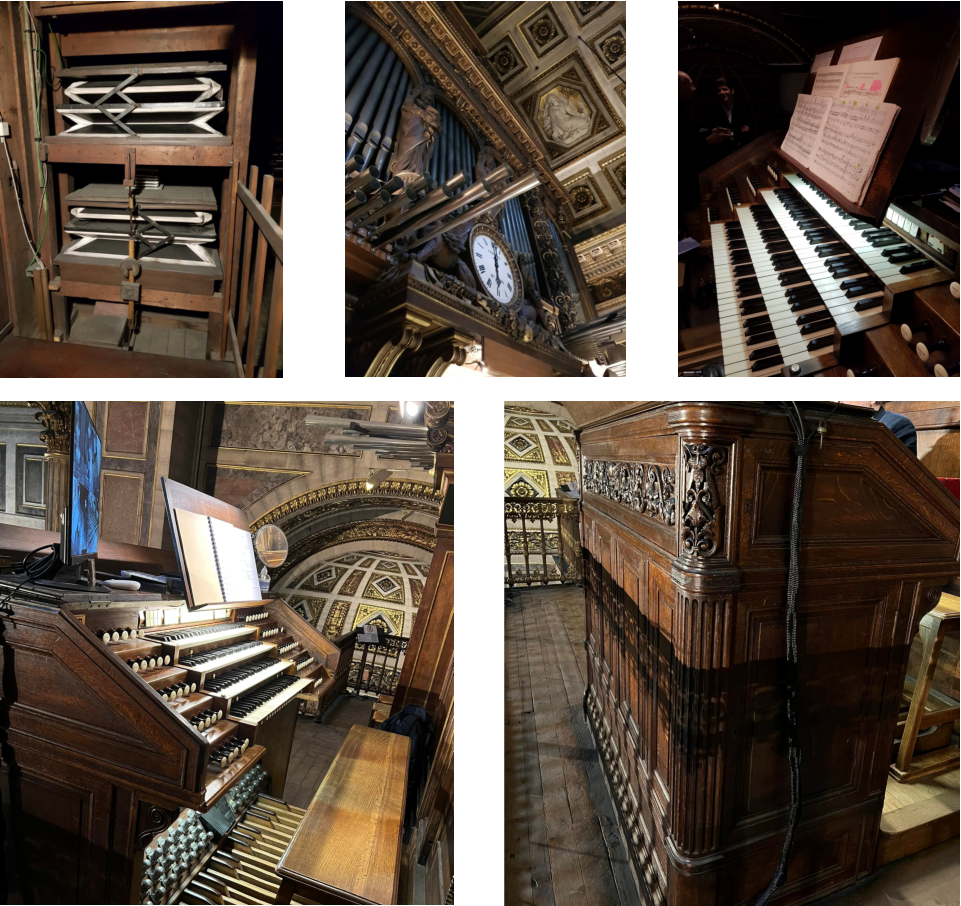
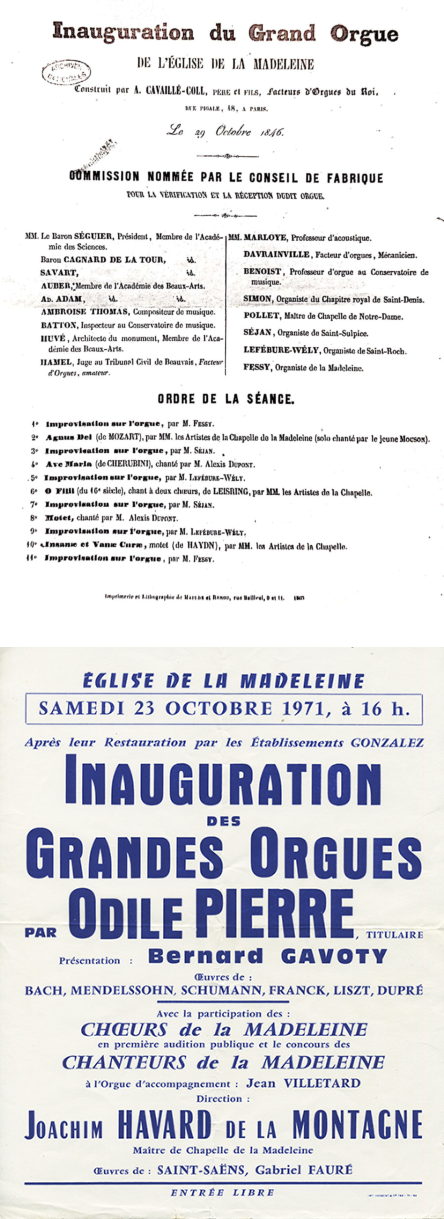
The Great Organ was completed in 1846, but the plaque of
the console reads: "Cavaillé-Coll Père et Fils, facteur d'orgues
du Roi, 1845". At that time, Dominique and his son Aristide
Cavaillé-Coll were still partners. The two builders had just
completed the great organ of Saint-Denis, and the
instrument of the Madeleine was one of the first instruments
built in the capital. At that time, the organ had 4 keyboards
and 46 stops. The entire piping was enclosed in a single case,
removing the notion of the contrast between Positif and
Grand-Orgue. Overhauls in 1858 and 1869.
1927
The instrument remained intact until 1927, when Mutin
performed an overhaul, removed Bourdon 8 and Octavin
from the Récit to place a Gambe and a Celeste.
1956-1957
Overhaul and extension by 6 stops by Ets Roethinger (work
directed by R. Boisseau):
•
Installation on the Bombarde of a Fourniture IV ranks and
a Cornet III ranks on the upper board of the 2nd Trumpet
of Cavaillé-Coll.
•
Transformation of the 2nd Trompette harmonique into
Bombarde 16, by shift.
•
Added a Prestant 4 and a new Cymbale III to the Swell .
1970-1971
Restoration by Danion-Gonzalez:
•
Removal of Barker machines (deposited at the Musée du
Conservatoire).
•
Electrification of note drawing and stops (direct electric
traction for G-O, Bomb. and Pos, electro-pneumatic for
Pedal and Swell),
•
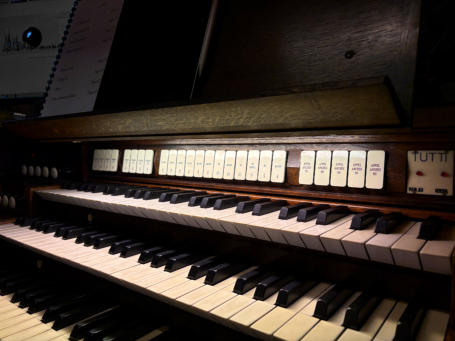
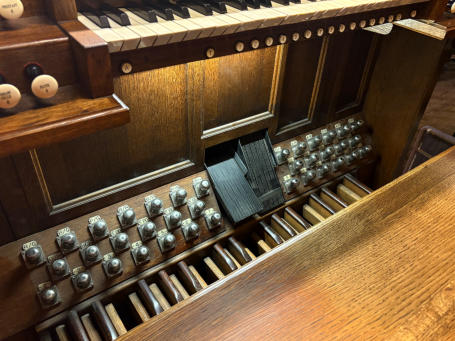
New console. with extension of manual keyboards to 56
notes. 32-note pedalboard.
•
New windchests for Pedal and Swell,
•
Change of Stoplist:
•
G-O: addition of Piccolo 1 and Cornet V ranks,
•
Swell: suppression of the Gambe and the Celeste of
Mutin to place a Bourdon 8 and a Larigot 1 1/3
•
Pedal: New Flute 4;
•
Voicing by J.-M. Cicchero.
1983
Repair of all the wind supply by Gonzalez.
1987/88*
Works by Bernard Dargassies.
As early as 1970, the traction of the PE and RE notes was
electropneumatic. However, the GO, PO, and BO had direct
electric traction. The sensitivity was very bad, so in 1986 it
was replaced by electro-pneumatic machines.
Restoration of stops transformed or added in 1970:
RE Plein Jeu too thin, Octavin 2 replacing a Doublette 2,
BO: Octavian flute 4 which had been cut in 1955,
GO Piccolo 1 added in 1970 far too skinny, Cornet enlarged
and moved.
2001-2002
Dargassies added the two stops en chamade that had been
planned by Cavaillé-Coll: a 8′ Trompette en chamade, also
usable at 16′ (starting from C2), and a 4′ Clairon en chamade,
also usable at 8′ (starting from C2).
2008
At the Récit, there was only one windchest, and the pipes
were packed and difficult to tune. In 2008, Dargassies split it
in two and put a walkway between it.
This organ has 46 stops out of the original 48, i.e. nearly 95% of
the original sound material from 1846. The wind chests are by
Cavaillé-Coll with the exception of those of the Pedal and the
Swell, which are by Gonzalez.
In this organ is the first set of Voix Céleste installed in the world.
*many thanks to Mr Bernard Dargassies for this information.


1846 - Cavaillé-Coll (1)
1858/69 - Cavaillé-Coll (6)
1927 - Mutin (5)
1957 - Roethinger-Boisseau (2)
1971 - Danion-Gonzalez (3a)
1983 - Gonzalez (5)
1987/88 - Dargassies (5)
2002 - Dargassies (2)
2008 - Dargassies (6)
III/60 - electro-pneumatical traction
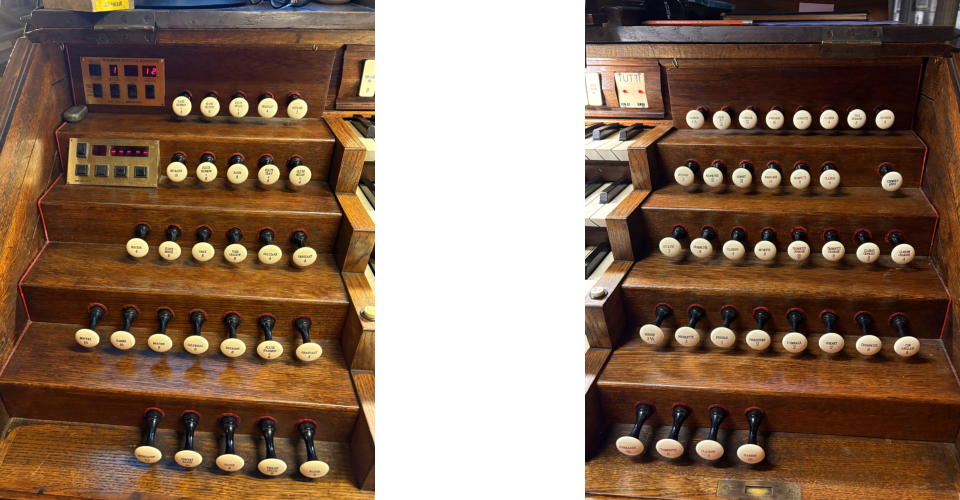
Stoplist


Titular organist
François-Henri Houbart
Olivier Périn (titulaire adjoint)
Organistes célèbres ayants illustré l’orgue par le passé :
Fessy, Lefébure-Wély, Saint-Saëns, Dubois, Fauré, Dallier,
Mignan, Jeanne Demessieux, Odile Pierre.
Concerts
One Sunday per month, 4 PM
Parish website
Videos
François-Henri Houbart
Hendrik Burkard
Audio (Festivo)
Jeanne Demessieux (Franck)
Jeanne Demessieux
Jeanne Demessieux
François-Henri Houbart
Photos
Case & console: Jeroen de Haan
Church: Vincent Hildebrandt
Other Photos: Victor Weller & facebook








The organs of Paris


ORGANS OF PARIS © 2026 Vincent Hildebrandt
C3
The Great Organ was completed in 1846, but the plaque of
the console reads: "Cavaillé-Coll Père et Fils, facteur d'orgues
du Roi, 1845". At that time, Dominique and his son Aristide
Cavaillé-Coll were still partners. The two builders had just
completed the great organ of Saint-Denis, and the
instrument of the Madeleine was one of the first
instruments built in the capital. At that time, the organ had 4
keyboards and 46 stops. The entire piping was enclosed in a
single case, removing the notion of the contrast between
Positif and Grand-Orgue. Overhauls in 1858 and 1869.
1927
The instrument remained intact until 1927, when Mutin
performed an overhaul, removed Bourdon 8 and Octavin
from the Récit to place a Gambe and a Celeste.
1956-1957
Overhaul and extension by 6 stops by Ets Roethinger (work
directed by R. Boisseau):
•
Installation on the Bombarde of a Fourniture IV ranks
and a Cornet III ranks on the upper board of the 2nd
Trumpet of Cavaillé-Coll.
•
Transformation of the 2nd Trompette harmonique into
Bombarde 16, by shift.
•
Added a Prestant 4 and a new Cymbale III to the Swell .
1970-1971
Restoration by Danion-Gonzalez:
•
Removal of Barker machines (deposited at the Musée du
Conservatoire).
•
Electrification of note drawing and stops (direct electric
traction for G-O, Bomb. and Pos, electro-pneumatic for
Pedal and Swell),
•
New console. with extension of manual keyboards to 56
notes. 32-note pedalboard.
•
New windchests for Pedal and Swell,
•
Change of Stoplist:
•
G-O: addition of Piccolo 1 and Cornet V ranks,
•
Swell: suppression of the Gambe and the Celeste of
Mutin to place a Bourdon 8 and a Larigot 1 1/3
•
Pedal: New Flute 4;
•
Voicing by J.-M. Cicchero.
1983
Repair of all the wind supply by Gonzalez.
1987/88*
Works by Bernard Dargassies.
As early as 1970, the traction of the PE and RE notes was
electropneumatic. However, the GO, PO, and BO had direct
electric traction. The sensitivity was very bad, so in 1986 it
was replaced by electro-pneumatic machines.
Restoration of stops transformed or added in 1970:
RE Plein Jeu too thin, Octavin 2 replacing a Doublette 2,
BO: Octavian flute 4 which had been cut in 1955,
GO Piccolo 1 added in 1970 far too skinny, Cornet enlarged
and moved.
2001-2002
Dargassies added the two stops en chamade that had been
planned by Cavaillé-Coll: a 8′ Trompette en chamade, also
usable at 16′ (starting from C2), and a 4′ Clairon en chamade,
also usable at 8′ (starting from C2).
2008
At the Récit, there was only one windchest, and the pipes
were packed and difficult to tune. In 2008, Dargassies split it
in two and put a walkway between it.
This organ has 46 stops out of the original 48, i.e. nearly 95% of
the original sound material from 1846. The wind chests are by
Cavaillé-Coll with the exception of those of the Pedal and the
Swell, which are by Gonzalez.
In this organ is the first set of Voix Céleste installed in the world.
*many thanks to Mr Bernard Dargassies for this information.

1846 - Cavaillé-Coll (1)
1858/69 - Cavaillé-Coll (6)
1927 - Mutin (5)
1957 - Roethinger-Boisseau (2)
1971 - Danion-Gonzalez (3a)
1983 - Gonzalez (5)
1987/88 - Dargassies (5)
2002 - Dargassies (2)
2008 - Dargassies (6)
III/60 - electro-pneumatical traction
Stoplist

Titular organist
François-Henri Houbart
Olivier Périn (titulaire adjoint)
Organistes célèbres ayants illustré l’orgue par le passé : Fessy,
Lefébure-Wély, Saint-Saëns, Dubois, Fauré, Dallier, Mignan,
Jeanne Demessieux, Odile Pierre.
Concerts
One Sunday per month, 4 PM
Parish website
Videos
François-Henri Houbart
Hendrik Burkard
Audio (Festivo)
Jeanne Demessieux (Franck)
Jeanne Demessieux
Jeanne Demessieux
François-Henri Houbart
Photos
Case & console: Jeroen de Haan
Church: Vincent Hildebrandt
Other Photos: Victor Weller & facebook

